AI did not enter the jewellery workshop through its front door. It arrived through a phone and a laptop. Suddenly, someone with no design training could produce an image that looked like an intricate jewel in minutes. That made visual exploration more accessible—but it also created a damaging confusion: an image of jewellery is not jewellery design.
Why has AI become a jewellery-industry question now?
The technology is no longer a side experiment. Deloitte’s Global Powers of Luxury 2026 reports that 41.2% of the luxury companies surveyed are implementing generative AI in selected areas, while 11.9% have embedded it in core functions. This covers luxury broadly rather than jewellery alone, but it marks a clear move from curiosity to operation.
Within jewellery, a specialist Gems & Gemology study from GIA compared five widely used image-generation platforms—Midjourney, DALL·E, Stable Diffusion, Leonardo and Firefly. Its conclusion was neither hype nor dismissal: AI is powerful for ideation and visualisation, but it does not replace a trained designer or an understanding of manufacture.
The third figure comes from Adobe Analytics, based on more than one trillion visits to U.S. retail websites. It is not global data and should not be projected onto Iran. Its directional signal is still important: among the categories Adobe tracked, conversion from generative-AI traffic was highest in electronics and jewellery. AI is not only sitting beside the designer; it is beginning to shape the customer’s shortlist before they reach a store.
The new scarcity is not imagery. It is trustworthy judgement.
Four real uses for AI in jewellery design and selling
1. Fast ideation, not final decisions
In GIA’s documented example, a designer exploring a blend of Art Deco and ancient Egyptian references generated roughly 16 variations in about five minutes. That speed is genuinely valuable at the beginning: proportions, rhythm, silhouette, colour and unexpected routes can be explored before hours are invested in drawing or modelling.
The images should be treated like rapid thumbnails, not finished work. Choosing the first seductive result and presenting it as a design simply skips the hard part: editing, rejecting and building a coherent logic.
2. Turning a human sketch into a client-readable render
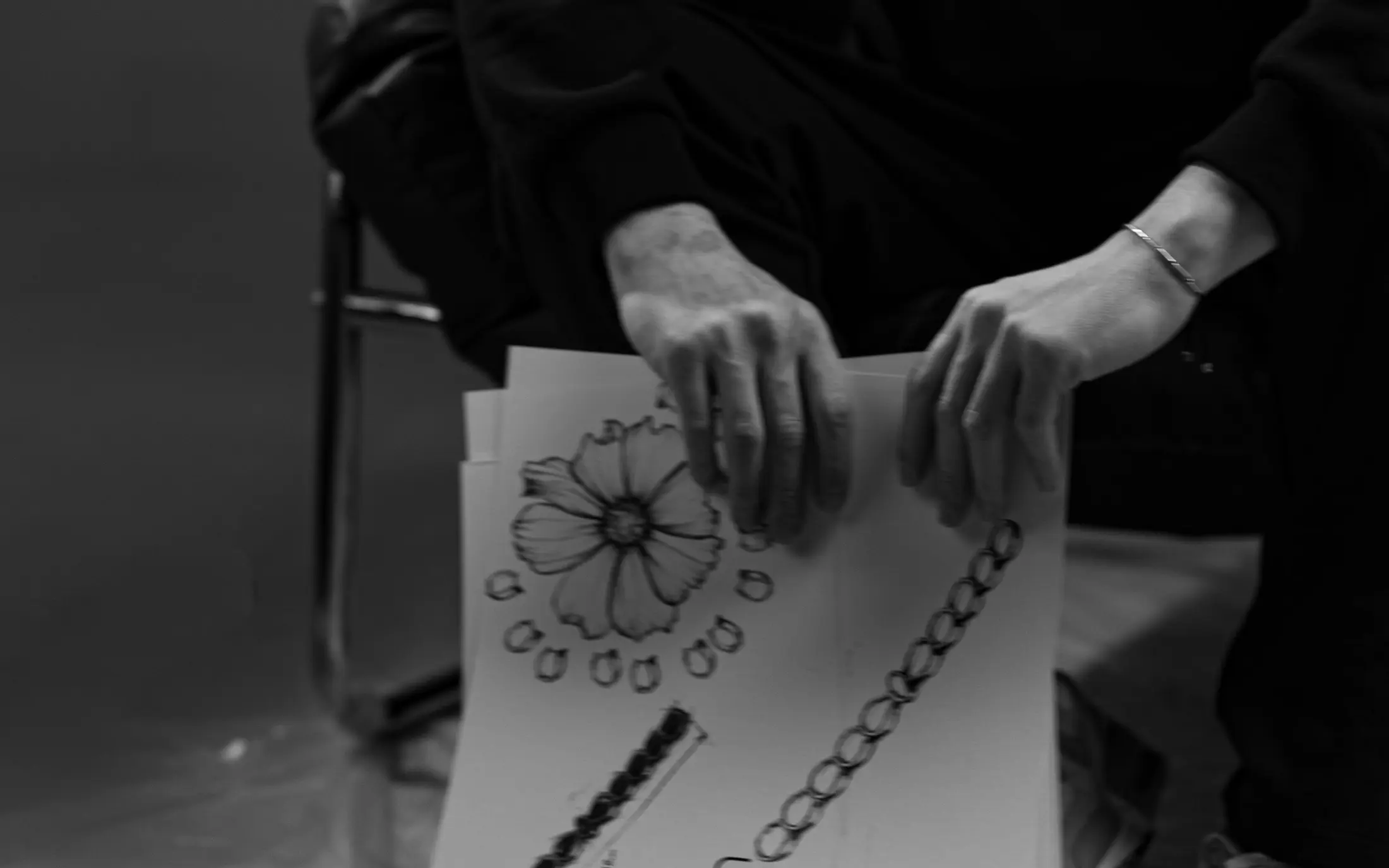
A stronger workflow starts with the designer’s own drawing. GIA describes how AI can translate a human sketch into a more photorealistic concept, helping a client approve direction before the full CAD investment. The core composition remains human; AI acts as a visual translator.
3. Engineering and optimisation inside CAD
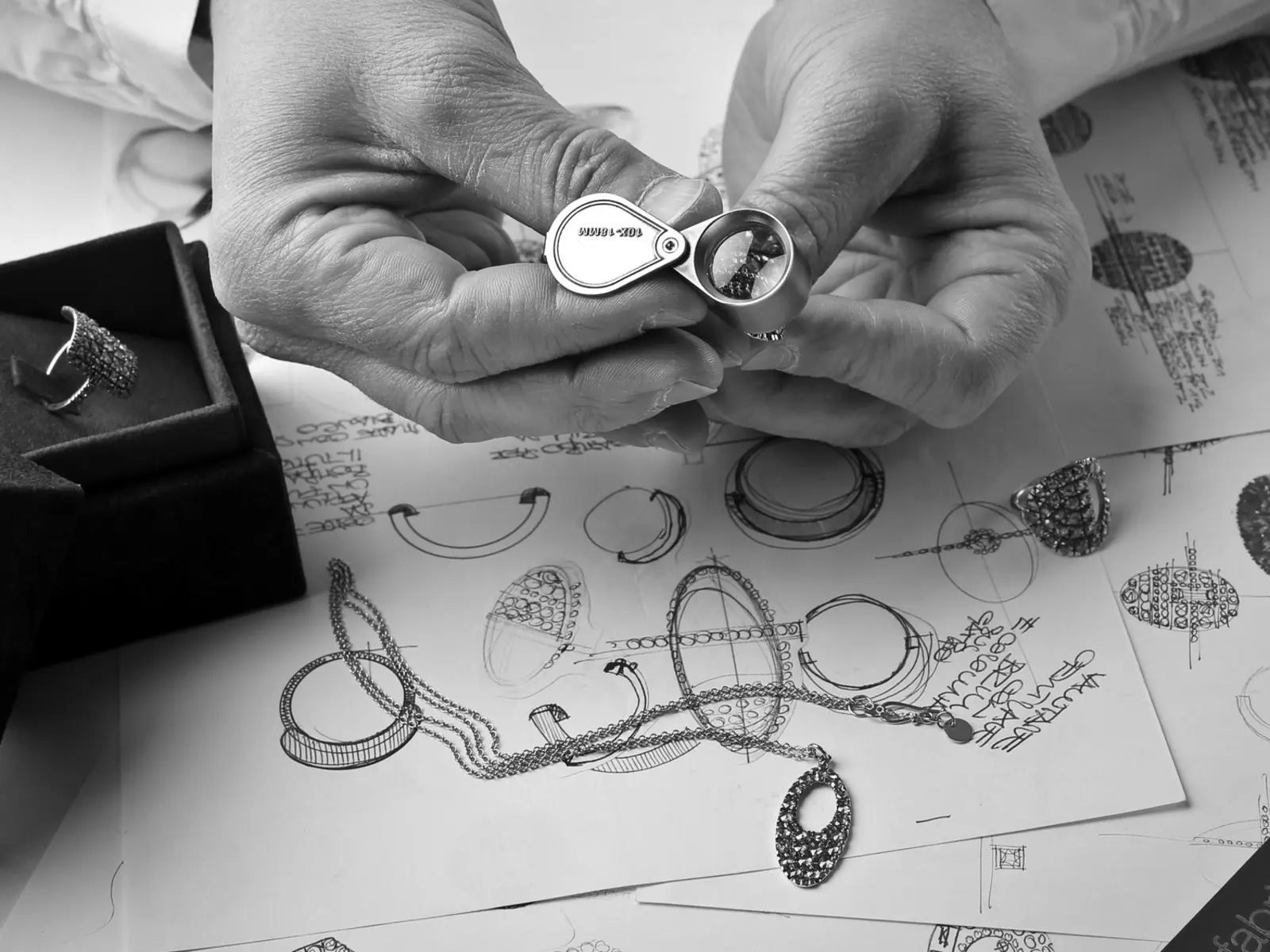
AI-enabled CAD is a different layer from image generation. It can work with constraints, reduce repetitive modelling and accelerate validation. Autodesk Fusion describes generative design as producing optimised options from engineering requirements. This is a general product-design example, not evidence of an automatic jewellery solution; it does show where serious value begins—when AI works with geometry, forces, material and production rather than pixels alone.
4. Personalisation, visual search and assisted selling
A customer can bring a photograph, symbol, memory or budget into an early conversation and see possible directions. On the buying side, AI assistants and visual search are becoming a first layer of advice. A directional McKinsey study on AI-mediated luxury shopping suggests consumers are more comfortable using AI for discovery and selection than relinquishing the human relationship around care. Its luxury sample is small and should be read as a snapshot, but the boundary is useful: technology can accelerate choice; trust remains human.
The market’s central mistake: AI produces images, not necessarily jewels
A render can look perfectly real and still be impossible to manufacture. GIA documents extra prongs, floating bezels, irregular stones and details that exist only on the image surface. Even generative 3D models can visually separate gem and metal while encoding them as one crude geometric object.
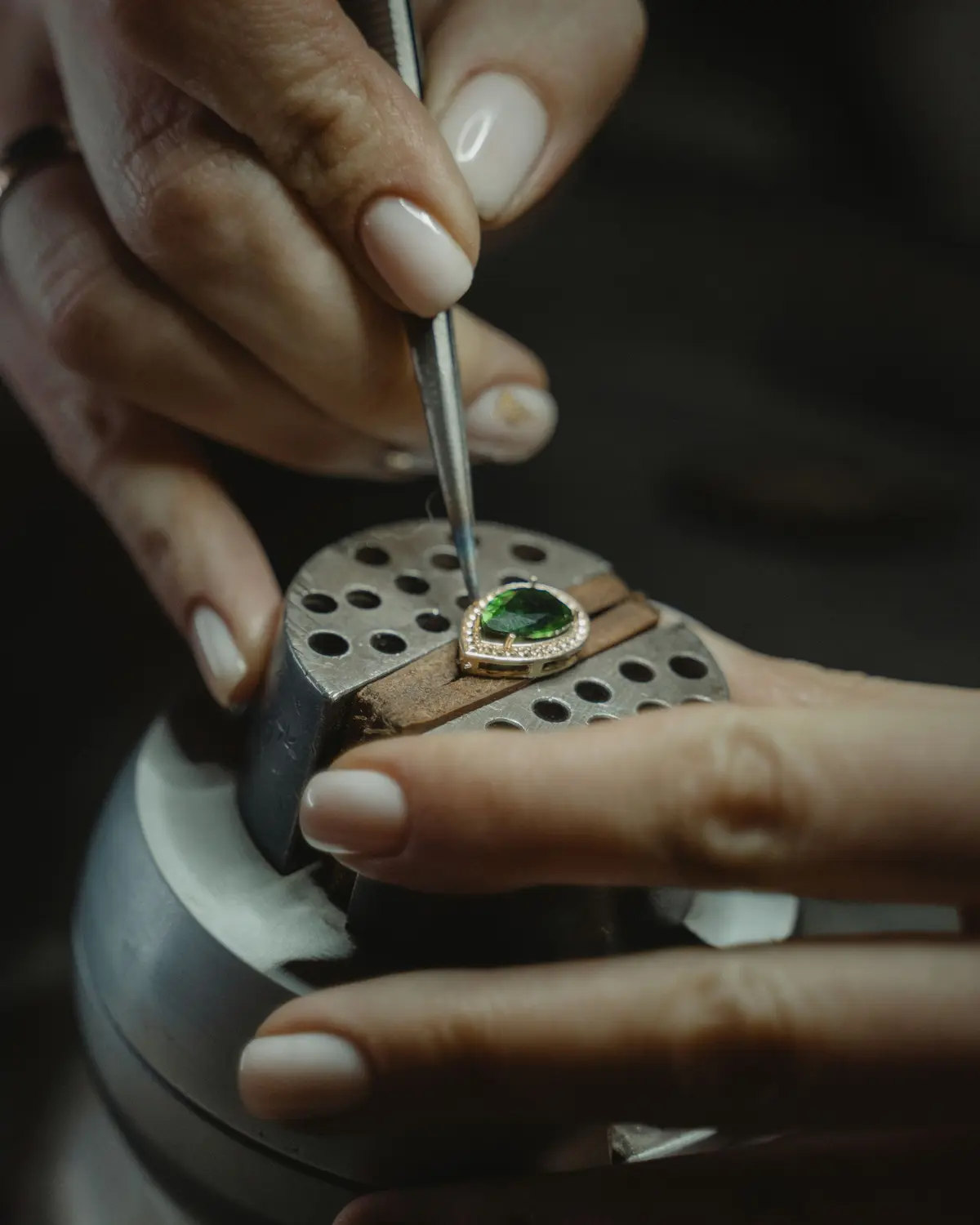
Image models optimise for resemblance. Workshops judge safe thickness, stone seats, prong angles, casting shrinkage, assembly tolerances, polishing allowance, final weight, comfort, repairability and the sequence of making. Those are not cosmetic details; they are the design.
Makes an image
It proposes form, light, colour and mood quickly, without guaranteeing the back or interior of the piece.
Resolves the making
A designer turns connections, thickness, settings, weight and tolerances into a real system.
Combines patterns
It learns similarities across vast data and produces combinations that appear new.
Creates meaning and accountability
A human decides why the object should exist, who it is for and what the brand promises.
If a seller cannot explain the back, section, clasp, thickness and making method of the piece shown in a render, they are not yet presenting a product. They are presenting an image for sale.
Where does AI belong in the design workflow?
Its strongest position today is between problem definition and final engineering. AI can widen the field of possibilities, but it must not remove the quality gate.
Client, budget, use, brand codes and production limits
The central idea and composition originate with the designer
Explore variations without surrendering judgement
Reject, combine and establish a coherent language
Geometry, weight, settings, tolerances and production file
Test, correct and secure maker approval
The rule is straightforward: no AI image should reach the workshop—or be promised to a client as final—without technical translation. A concept render can approve direction; production approval belongs to CAD and specifications.
Copyright, originality and the difficult question of ownership
The risk is not limited to looking like someone else’s work; ownership of the output itself may be uncertain. A WIPO review of the U.S. Copyright Office position explains that fully AI-generated work cannot be copyrighted there, while sufficiently original human selection, arrangement or modification may be protected. Jurisdictions differ and this is not legal advice. The operational lesson is simpler: the more original, documented human authorship a brand contributes, the stronger its claim to the result.
Prompting with the name of a living designer, uploading a confidential client concept to an untrusted platform, and selling raw output as “exclusive design” create three separate risks: possible infringement, data exposure and loss of trust. Even without litigation, a brand can lose the credibility that it genuinely makes something of its own.
Start with your archive
Use approved sketches, forms, construction details and brand codes—not another designer’s name—as the primary reference.
Keep the decision trail
Retain the brief, first drawing, iterations, human edits and CAD file so the creative path is visible.
Protect confidentiality
Check a tool’s data terms before uploading client work or an unreleased collection.
Label concept versus product
Do not promise final material, weight or construction when the image is only being used to discuss direction.
Will AI eliminate the jewellery designer?
Some tasks will become cheaper: generic moodboards, surface variations, early renders and repetitive content. People whose value is limited to operating software or making an attractive image will face pressure. But jewellery design is not one task. It combines form, history, the body, material, weight economics, CAD, casting, setting, finishing, client experience and brand language.
AI does not remove the value of an idea; it reduces the value of an idea with no depth behind it. The strongest future designer will not be the person who writes the most prompts. It will be the person who rejects weak output fastest, understands why it fails and can carry a better version all the way to a real object.
The opportunity—and danger—for Iran’s gold industry
There are two plausible futures. In the weak one, the market fills with similar renders, rapid imitation and unmakeable promises; design education is reduced to prompting; and the gap between an Instagram image and product quality widens. AI does not improve production in that scenario. It simply accelerates average work.
The stronger future begins with documenting Iranian forms, understanding local making, building brand-owned digital archives, and teaching drawing, software and workshop knowledge alongside AI. This is an analytical inference: a model trained on the global visual internet naturally gravitates toward market averages. Distinction appears when people give it proprietary memory, criteria and context.
A practical playbook for brands and workshops
Buying several subscriptions is not an AI strategy. A contained 90-day pilot is more useful: one product category, a small team and explicit measures. Render speed alone is not success. Track how many concepts become manufacturable CAD, whether client revisions fall, what production errors emerge and whether the output is recognisably yours.
Proprietary library
Organise designs, forms, materials, exclusions and brand codes—the context a public model does not possess.
Limited pilot
Start with one collection or custom workflow, not a sudden replacement of the entire process.
Technical gate
No output enters pricing or production without a technical designer, CAD review and maker approval.
Useful metrics
Measure approval time, concept-to-product conversion, production errors, client response and brand distinctiveness.
The honest conclusion is that AI is neither saviour nor enemy. It is leverage. In a weak team, it accelerates anonymous imagery. In a strong one, it frees time for thought, testing and personalisation. The coming competition is not human versus machine; it is teams that substitute tools for judgement versus teams that use tools to build better judgement.
Frequently asked questions about AI in jewellery design
What does AI currently do in jewellery design?
Its strongest uses are visual ideation, variation, sketch-to-render translation, early personalisation, and assistance in search and selling. An image output is not a manufacturing file.
Can an AI-generated jewellery image be manufactured directly?
Usually not. A technical designer must translate it into exact geometry, thickness, settings, weight, connections and production tolerances before prototyping.
Will AI replace jewellery designers?
It will reduce repetitive visual tasks, but concept, selection, manufacturability, brand language and final accountability remain human. Designers with making and CAD knowledge are better positioned.
Who owns an AI-generated jewellery design?
Rules vary by jurisdiction. Some systems do not protect fully machine-generated output, while sufficiently original human contributions may qualify. Local legal advice is needed for specific cases.
What is the best professional AI workflow for a jeweller?
Begin with a brief and human sketch, use AI to explore, curate and edit as a designer, then move through CAD, prototype and workshop approval.
Should a student learn AI before drawing and CAD?
No. Form, proportion, material and construction remain the foundation; CAD follows, and AI works best as an accelerator on top of those skills.
The essay separates luxury-sector adoption, specialist jewellery research, intellectual-property guidance and shopping evidence. U.S. or global-luxury figures are not presented as Iranian market statistics.
- GIA / Gems & Gemology — Generative Artificial Intelligence as a Tool for Jewelry Design
- Deloitte — Global Powers of Luxury 2026
- WIPO Magazine — Human creativity and copyright in AI-assisted work
- Adobe Analytics — Generative AI referrals to U.S. retail websites
- Autodesk — AI-powered CAD and generative design
- McKinsey — Human-centred luxury in the agentic age