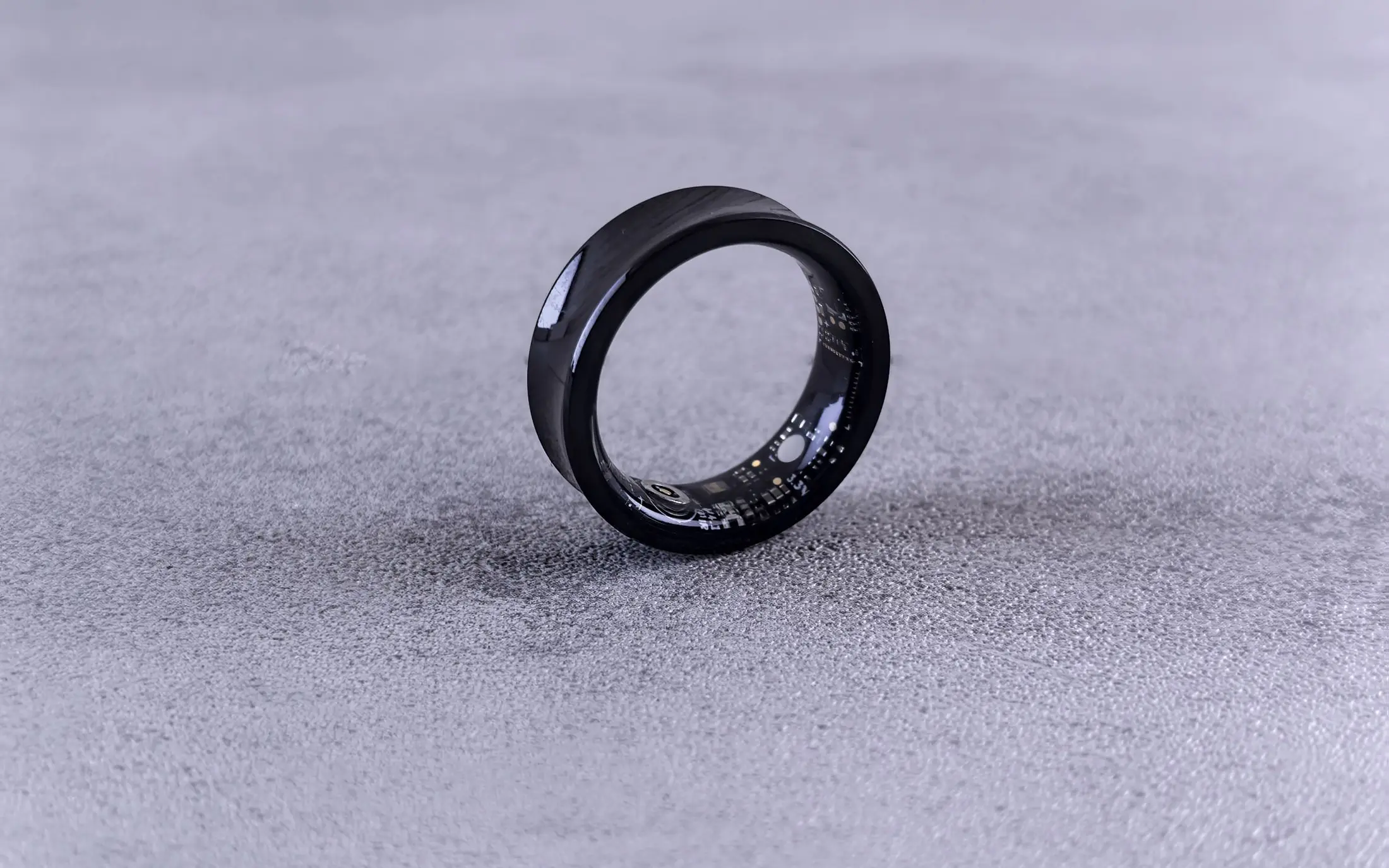
The finger is an attractive sensing site: a ring stays in contact with the body, blood vessels sit close to the surface and people are already accustomed to wearing one. That advantage creates responsibility. When a beautiful object reports a number about the heart, sleep or glucose, users may trust it more than the evidence deserves.
The promise of smart jewellery: technology that need not look like technology
A smartwatch remains a screen on the wrist. A ring or earring can disappear into the language of adornment. This is not cosmetic. A health device produces useful longitudinal data only when people actually keep wearing it. Comfort, weight, skin response and compatibility with personal style directly affect data quality.
Researchers are also exploring other forms. The University of Washington’s Thermal Earring prototype is roughly the size and weight of a paperclip, with a 28-day battery and two sensors separating earlobe from ambient temperature. In an initial six-person study, it outperformed a smartwatch for resting skin temperature. Six is a tiny sample, the object is not commercially available and this is not medical validation—but it shows how jewellery design can alter the sensing problem.
What does the evidence actually say? Promising, but uneven
A 2025 systematic review examined 107 smart-ring studies involving roughly 100,000 participants. Performance for heart rate, heart-rate variability and sleep detection was promising in many settings, while applications had expanded into inflammation, mental health and chronic-disease monitoring.
The limitations matter just as much: 65% of studies had moderate-to-high risk of bias; algorithms were proprietary in 89%; samples were often small or demographically narrow; and adherence declined over long periods. “Accurate in a study” is not the same as “reliable for everyone’s medical decisions.”
The research edge is striking. A 2026 Nature Communications paper describes an AI-enabled biometric ring with a miniaturised olfactory sensor for analysing metabolic odour compounds. It is a research direction, not permission for any commercial ring to advertise that it “diagnoses metabolism.”
The medical boundary: an app number is not automatically a clinical measurement
On 21 February 2024, the U.S. FDA warned that it had not authorised, cleared or approved any watch or ring intended to measure or estimate glucose on its own without piercing the skin. In 2025 it issued a related warning about unauthorised wearable blood-pressure features. The reason is concrete: a wrong number can drive an unsafe medication change or delay treatment.
See a trend
Helps reveal personal patterns in sleep or activity without diagnosing disease.
Test a hypothesis
A prototype or algorithm evaluated in a limited population and not yet generalisable.
Make a clinical claim
Designed to inform care and subject to relevant validation and regulation.
Promise without evidence
A vital measurement or diagnosis with no method, error range, study or authorisation status.
The more beautiful and invisible the device becomes, the greater its duty to make limitations visible.
The real design problem: sensor, body and object must work together
A good sensor in a poor body does not make a good product. Ring thickness affects comfort and optical contact. Resizing can change sensor distance. Waterproofing complicates repair. Batteries have finite lives, while jewellery is expected to endure across generations. Alloy, coating and adhesive must survive sweat, sensitivity and overnight wear.
Real bodies
Test across skin, size, age, motion and environmental conditions.
Real lifetime
Design battery, sealing, repair, component replacement and electronic end-of-life.
Real claims
Use precise language for estimate, trend, research alert and medical diagnosis.
Real beauty
Do not hide technology to hide its limits; translate both honestly into form.
The body as data: more intimate than any jewel
A traditional ring may reveal taste or relationship status. A smart ring can infer sleep, cycle, stress, illness or location. Ownership becomes practical: does raw data belong to the wearer? Does deleting an account delete the data? Is it used for model training or advertising? If the company closes, does the ring continue to work?
The jewellery industry’s opportunity is not to imitate gadget companies. Collaboration among jeweller, sensor engineer, clinician, privacy specialist and repair technician could create an object that is both wearable and responsible. Iranian designers can contribute form, material, comfort and cultural insight, but health claims must still pass through expertise and the relevant market’s regulatory path.
If you bought the ring but cannot reach your own data without a cloud account, monthly subscription or company permission, which part of the jewel do you actually own?
Frequently asked questions
What can a smart ring measure?
Depending on its hardware and validation, it may estimate heart rate, heart-rate variability, skin temperature, movement and sleep patterns. Accuracy varies by metric and device.
Can a smart ring measure blood glucose without a needle?
The FDA says it has not authorized, cleared or approved any watch or ring intended to measure or estimate glucose on its own without piercing the skin.
What is the difference between a wellness device and a medical device?
A wellness product can help users understand habits and trends. A device making diagnostic or treatment claims must meet the relevant validation and regulatory requirements.
What is the central design challenge in smart jewellery?
Balancing signal quality, comfortable hypoallergenic contact, battery, repairability, beauty, data security and honest claims about capability.
Numerical claims link to primary material or reputable reporting. U.S. and European data are not presented as Iranian market statistics, and early research prototypes are separated from commercial and medical devices.
- PubMed / Biomimetics — Smart Ring in Clinical Medicine: A Systematic Review (2025)
- FDA — Warning on smart rings and watches claiming non-invasive glucose measurement
- FDA — Warning on unauthorized wearable blood-pressure measurement
- University of Washington — Thermal Earring prototype
- Nature Communications — AI wearable biometric ring for metabolic-odour analysis (2026)
- npj Flexible Electronics — Wearable and implantable biosensors review (2026)