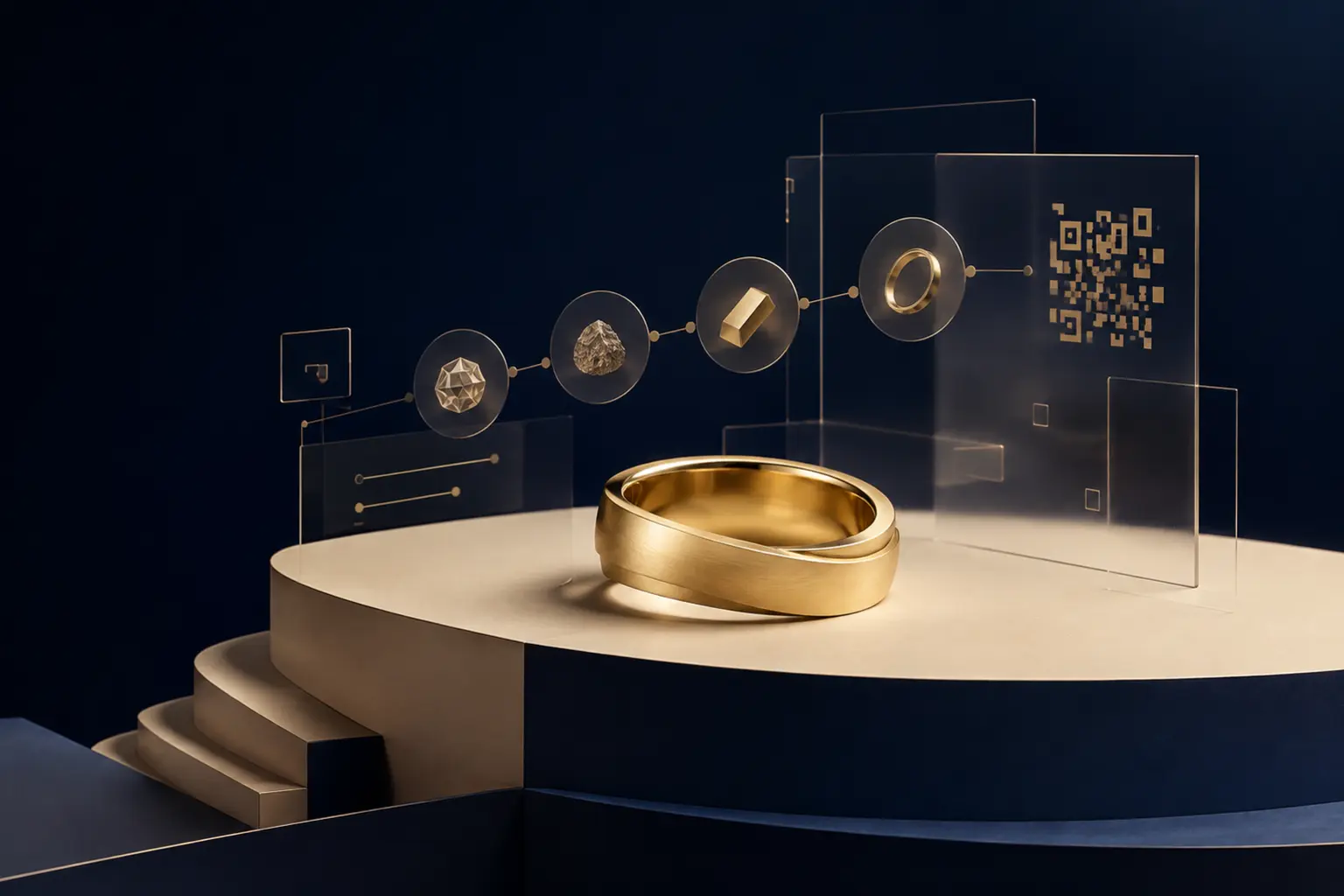
The European Union launched its Digital Product Passport Registry on 20 July 2026. That does not mean every jewel is suddenly subject to a new legal passport. It does make the direction clear: luxury objects will increasingly be expected to carry machine-readable, persistent evidence about identity, materials and history.
What has actually become operational?
A Digital Product Passport, or DPP, is a digital identity for a product, component or material. The EU Registry stores unique identifiers and registration metadata, while the complete record may remain with the economic operator or a service provider. Consumers, repairers, recyclers, customs and regulators see information according to their access rights.
Implementation is progressive, beginning with batteries and expanding to groups such as textiles, steel, aluminium and other products. Current EU material does not announce one immediate, jewellery-wide obligation. Any software seller claiming that all jewellery is definitively mandated in 2027 is overstating the published rules.
Why jewellery needs it before the law does
Jewellery is often designed to outlast garments and many consumer devices. A piece may survive for decades, be repaired, resized, reset, inherited and resold. At each transfer, information disappears: maker, fineness, original weight, stone identity, laboratory report, service history and care limitations.
A good passport attaches that memory to the object. It can strengthen aftercare and resale for the brand, make material claims more verifiable for the buyer, and provide more structured data to B2B partners. The LV Diamond digital certificate and Bvlgari Digital Passport are voluntary examples connecting specifications, origin, authenticity and making content to product identity.
In luxury, a digital passport does not replace the story. It preserves the evidence behind it.
The minimum useful record
A practical pilot can begin with a unique identifier, brand and maker, manufacturing date, metal composition and fineness, weight, stone specifications, laboratory report, provable sourcing stage, product images and care instructions. Repairs, resizing, stone replacement and recorded transfer events can extend the history; that record does not itself transfer legal title.
The data must never claim more than the evidence. If mine origin is unknown, record the limit. If recycled gold is used, define recycled, name the refiner where possible and explain verification. An honest empty field is better than a fabricated sustainability story.
A QR code does not manufacture truth
Printing a code is easy; maintaining reliable data is hard. A system must define who enters information, who can amend it, where previous versions remain and what happens if the brand ceases trading. EU rules emphasise persistence, interoperability, authentication, integrity and managed access.
Without data governance, a passport becomes another marketing page. If incorrect information is dressed in technical language, it can create false confidence. The evidence chain—refiner documents, laboratory reports, workshop records and service history—matters more than interface polish.
A realistic pilot for an independent brand
Do not begin with an expensive programme covering all inventory. Select a collection of 20 to 50 pieces. Define the data model before buying software, attach evidence to every claim, connect QR or NFC to a persistent identifier, and test one repair or resize from beginning to end.
Success is not scan count. Measure completeness, entry time, error rate, aftercare speed, transfer-event recording and whether a trade partner can trust the record. If the passport cannot resolve a real disagreement about a stone, fineness or repair, it is not useful yet.
Frequently asked questions
Are Digital Product Passports mandatory for all jewellery in Europe?
No. The DPP framework and Registry are operational, but product requirements are being introduced progressively. At publication, no blanket requirement for every jewel has been announced.
Is a QR code the same as a Digital Product Passport?
No. A QR code is only a data carrier or access route. A passport needs a persistent identifier, reliable data, access control, long-term availability and change history.
What is the first practical benefit for a jewellery brand?
Connecting authenticity and specifications to aftercare, so repair, resizing, laboratory reports, recorded transfer events and resale lose less information. A passport is not, by itself, a legal transfer of title.
Historical, technical and regulatory facts were checked against official and primary sources. Vendor performance claims are attributed to their publishers and kept separate from editorial analysis. This is not legal, investment or environmental advice.
- European Commission — Digital Product Passport Registry is live (20 July 2026)
- European Commission — Digital Product Passport
- EUR-Lex — Regulation (EU) 2024/1781
- EUR-Lex — Implementing Regulation (EU) 2026/1778
- European Commission — DPP Registry
- Louis Vuitton — LV Diamond digital certificate
- Bvlgari — Digital Passport
- Responsible Jewellery Council — Code of Practices