A useful product page narrows the gap between what customers imagine and what they actually order. In jewellery, words such as exceptional, authentic or brilliant cannot replace an accurate material name and a clear description. This article starts with industry terminology resources, then proposes a DIDAR Editorial framework for organising product information.
What are the CIBJO Blue Books?
CIBJO publishes Blue Books covering terminology and standards in fields including diamonds, coloured stones, pearls and precious metals. Its official introduction describes their application as voluntary and the documents as subject to review. Users should therefore check the current edition relevant to their product.
Citing these resources does not certify a seller or authenticate a piece. This article makes no claim that DIDAR is accredited, endorsed by or a member of CIBJO. The purpose here is to identify a terminology resource and explain why a shared vocabulary matters.
Sources for this section: [1]
Make story, specifications and evidence distinguishable
We suggest three readable layers. The design story explains form and inspiration. Specifications describe the object. Evidence records the basis for a claim. Readers should not have to decode evocative prose to find a material or measurement.
A colour in a product name should not automatically become a gemstone identification. If supplier information is awaiting review, keep that status explicit in the internal record. Avoid filling gaps with promotional adjectives or moving a provisional description into a final product page without checking it.
Build the product record before writing the caption
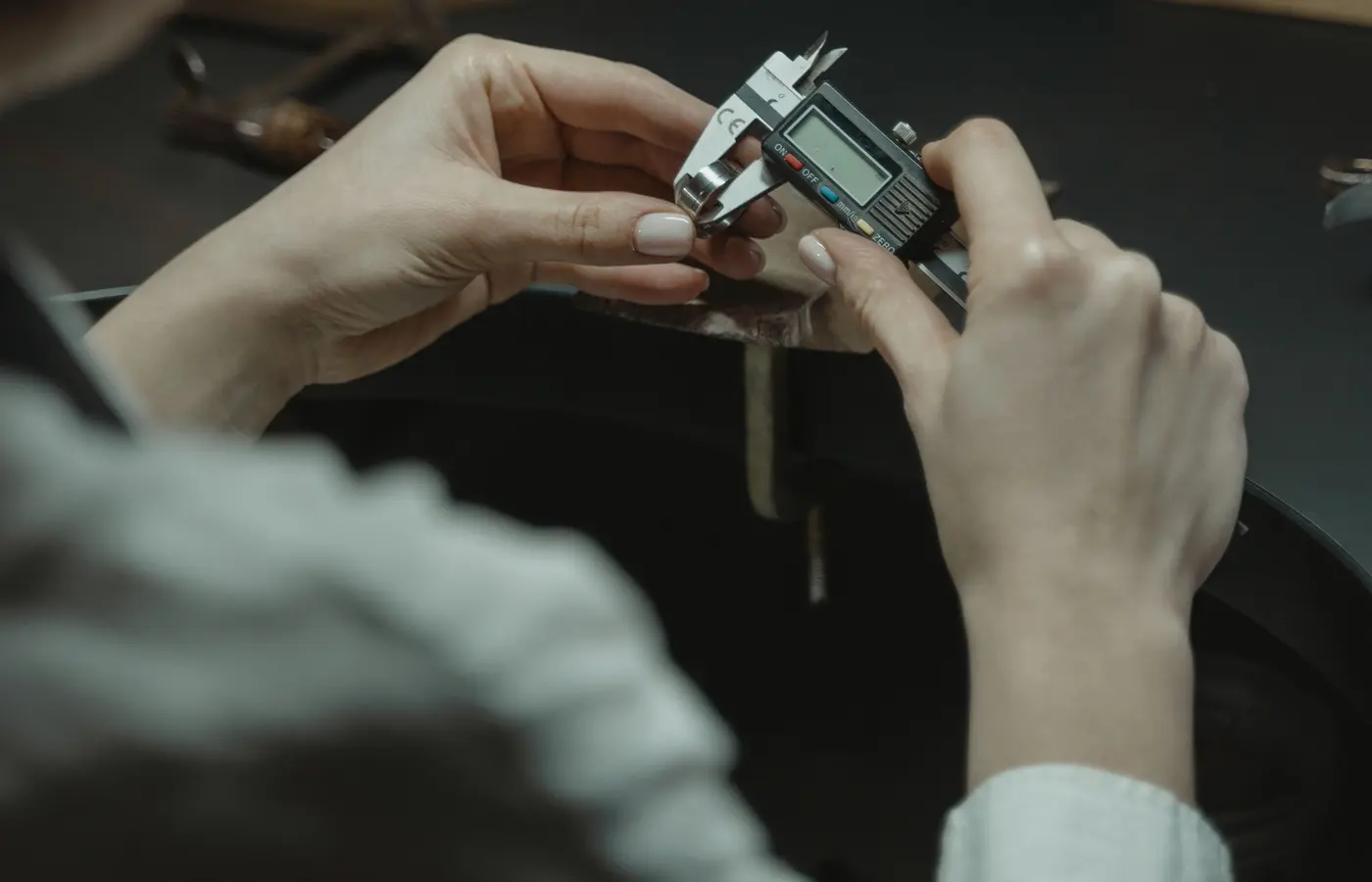
Our proposed record begins with a stable identifier. Add model name, object type, stated material and fineness with their evidential basis, dimensions, available sizes, stone information, images and ordering conditions. For weight, distinguish a measurement of an existing piece from an estimate for a future order.
Keep the source and internal review date beside each entry: your measurement, supplier documentation or a laboratory report. Not every internal note belongs on the sales page, but the team should be able to explain how a claim was established. When a laboratory report is supplied, identify it and its relationship to the relevant stone.
Turn a vague claim into useful information
Imagine a draft that says only: a luxury gold necklace with an exceptional stone. A more useful version identifies the model and verified material, then explains available lengths, known stone details, the type of image and ordering status. This is a writing exercise, not a description of an actual DIDAR product.
If the final weight of a commission is not yet known, state when it will be measured and explain the applicable ordering conditions. If the image is a render, label it accordingly. The aim is to show which facts are established and which depend on the specific order.
Use one information source across sales channels
Confusion starts when a website shows one length, a caption another and a salesperson uses an earlier version’s price. Treat the product record as the shared reference, with a responsible editor and a date for each change. Before publication, compare the identifier, imagery, measurements and ordering text against it.
Place essential information in readable page text. Consistent brand and product names, clear titles and organised specifications help people and search systems interpret the content. Structured data should agree with the visible page. Extra claims hidden in technical fields cannot substitute for accurate information.
Why this matters to DIDAR GOLD
DIDAR’s official account distinguishes DIDAR SPACE, its setting for education and dialogue, from DIDAR GOLD’s B2B orientation within the gold industry. Reliable specifications support clearer conversations between designers, manufacturers and businesses.
This checklist is an editorial proposal for writing and documentation, not a legal compliance manual or product certificate. Consult the current relevant specialist source for terminology and the competent authority for requirements in the destination market.
Frequently asked questions
Do CIBJO Blue Books authenticate a piece of jewellery?
No. They are terminology and industry standards documents. Referring to them does not itself authenticate a product or endorse a seller.
What if the final weight is not yet known?
Distinguish an estimate from a measured weight and explain when the final measurement will be established. The ordering conditions should make that uncertainty clear.
Where should a product-page review start?
Choose one product and check its identifier, name, material, dimensions, stone information, imagery and ordering conditions against the internal record. Expand the process from there.
Historical, technical and regulatory facts were checked against official and primary sources. Vendor performance claims are attributed to their publishers and kept separate from editorial analysis. This is not legal, investment or environmental advice.