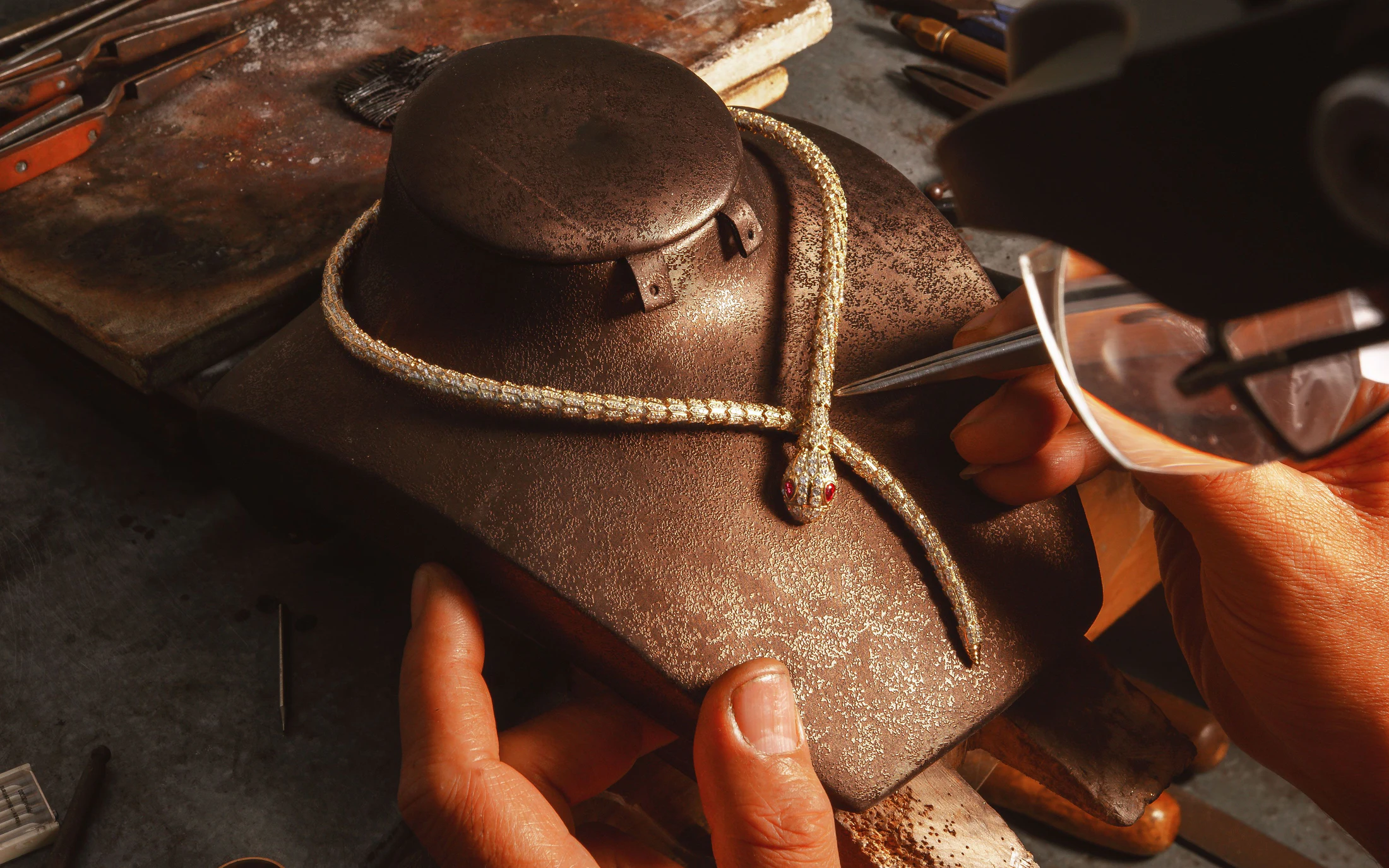
The global market is sending a clear signal: desire for gold has not disappeared, but household budgets can no longer carry yesterday’s weight. The weak response is to make pieces indiscriminately thin. The professional response is to re-engineer form, construction, use and price—light gold, not weak gold.
What the market says: fewer grams do not mean less desire
The World Gold Council’s Q2 2026 data show global jewellery demand falling from 335.3 tonnes a year earlier to 278.2 tonnes, a 17% decline and one of the weakest second quarters in the series. Yet the value of jewellery demand in the first half rose from US$71bn to US$86bn—up 22% even as tonnage weakened.
The split between volume and value is the story. The same report records rising shares for lightweight products, lower-carat designs in parts of Asia and old-for-new exchange. China’s lightweight Hard Pure Gold products outperformed through affordability and design innovation. In the US and Europe, mass-market buyers also moved towards lighter and lower-carat pieces while high-end jewellery proved more resilient.
Iran’s affordability shock is sharper. The head of Tehran’s gold and jewellery union told ISNA that the domestic 18k price rose 129% between the start of 1404 and 10 Farvardin 1405, while industry production fell by an estimated 35–45%. The production figure is a guild estimate rather than a national census, but the direction is unmistakable: if manufactured jewellery does not adapt to new budgets, demand will keep migrating towards raw-weight and second-hand products.
The real 2026 trend is not less gold. It is more value from every gram.
What lightweight gold means—and what it does not
Four ideas are routinely confused. Karat measures alloy purity; weight measures metal mass; hollow or solid describes construction; durability is the outcome of geometry, wall thickness, joints, clasps, alloy, quality control and use. An 18k piece can be light and durable. A heavier piece can still fail at a poorly designed connection.
“Lightweight” is therefore neither a quality mark nor a warning by itself. Good work discloses construction, reinforces stress points, uses appropriate clasps and remains repairable. A large-looking piece made with fragile walls—or a hollow piece sold as if it were solid—is not innovation. It is a transfer of risk from seller to buyer.
Construction disclosure
Solid, hollow, electroformed or hybrid construction should be clear before purchase, not discovered during repair.
Stress engineering
Joints, hinges, clasps and contact points matter more than average thickness across the whole piece.
Repairability
Daily jewellery should be serviceable. A piece that cannot be repaired is not merely cheaper; it has a shorter useful life.
Explainable value
Customers should know what sits above metal value: design, technology, making, warranty and service.
Four design responses that can genuinely change the market
1. Negative space instead of filled surface
Openwork, mesh, line and negative-space structures can preserve presence without filling every millimetre with metal. The solution works when emptiness is part of the visual language, not evidence of material being stripped away. Proportion, edge finishing and rhythm make the difference.
2. Engineered volume instead of raw mass
Formed, shell and hollow structures can create generous scale at lower weight. Reuters reported from Italy’s gold-making hubs that producers are using machinery and redesigned construction to keep the size of some pendants while cutting weight by as much as half. That demonstrates technical possibility, not automatic quality; wall thickness, alloy, seams and real-use testing still decide durability.
3. One piece, several uses
A necklace that converts to a bracelet, a removable pendant or an earring with a detachable second element raises use value. Modularity is not a party trick when it is engineered properly. At high prices, cost per wear becomes almost as important as gram weight.
4. Redesigning old gold, not merely exchanging weight
Old-for-new programmes become more valuable when a brand can carry part of a family’s story or form into a new piece. The customer needs less fresh metal, while design and workshop orders remain alive. This is a stronger proposition than a simple trade-in discount.
Technology makes weight an input, not a surprise
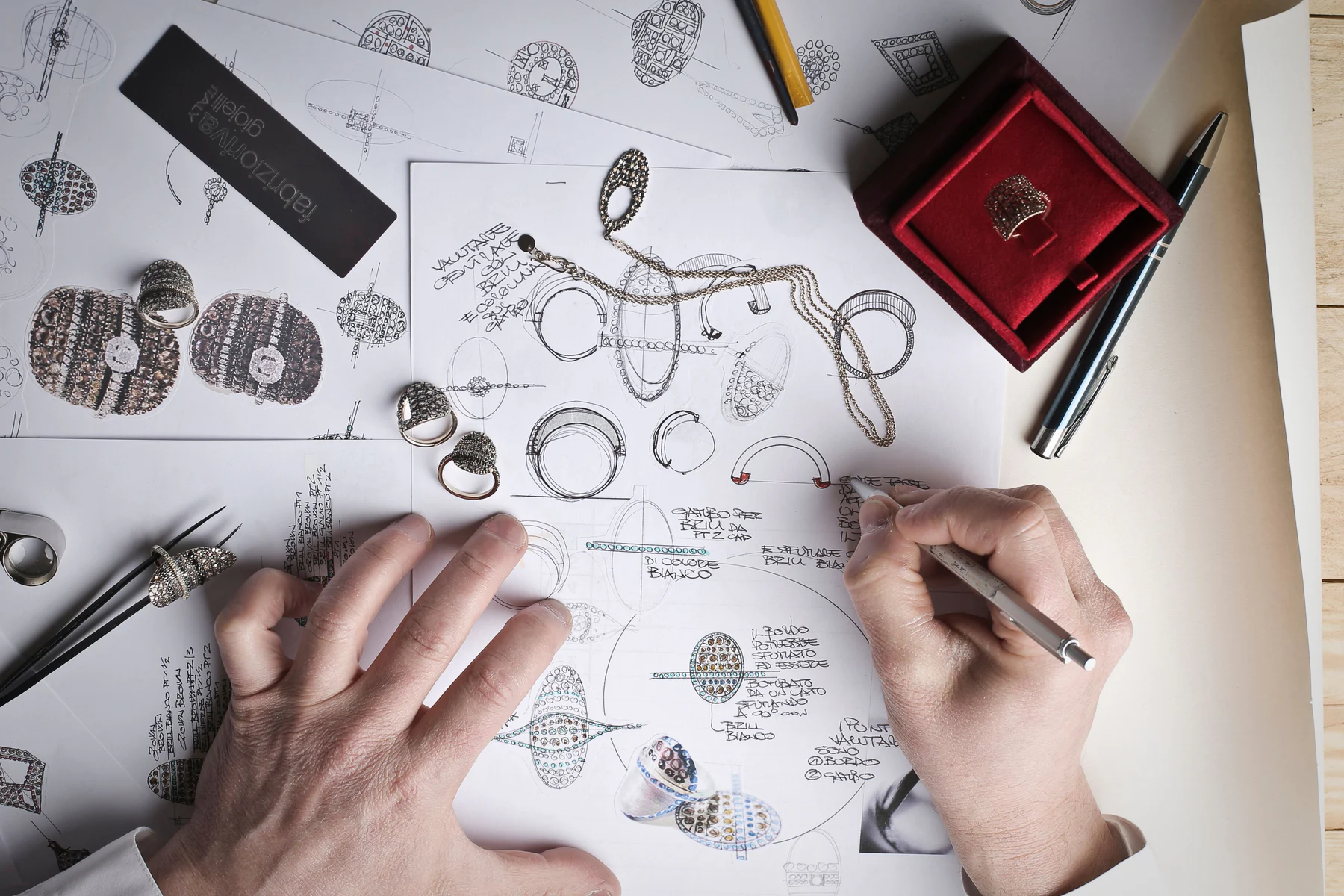
In many workshops, final weight is still discovered after making: the form comes first and the team then tries to lighten it. A professional process works in reverse. Target weight, use case, stress points, production method and retail position enter the brief at the start. 3D modelling, resin or wax prototypes, thickness analysis, precise casting and weight control allow several versions to be tested before expensive metal is consumed.
Software does not replace the bench. It reveals errors earlier; the craftsperson decides which wall survives real use, which clasp loosens after repeated wear and which surface still holds character after finishing. Competitive advantage comes from combining classical making knowledge with digital tools.
How buyers can judge lightweight jewellery
A display-case impression is not enough. Ask four questions: Is the piece solid or hollow? Will exact weight and karat appear on the invoice? Is it designed for daily or occasional wear? If the body, hinge or clasp is damaged, can the brand repair it? A seller who avoids clear answers is hiding product risk.
Handling matters too. Edges should be finished, clasps should resist normal pull, pendants should sit in balance and hollow areas should not deform under trivial pressure. Lightweight gold is not a bullion bar, but it should be reliable for the use it promises.
A practical playbook for brands and manufacturers
Design collections to weight bands
Do not force a target price onto a finished object. Weight and price should enter the design brief from day one.
Disclose solid and hollow construction
Transparency may complicate a short sale, but it builds long-term trust, service and buy-back value.
Define wear tests
Clasps, joints, pressure, abrasion and repairability should be tested and documented before launch.
Build an old-gold redesign service
Instead of fighting raw gold, connect metal customers already own to a fresh design and workshop order.
Price architecture matters as much as product engineering. A brand needs everyday, signature and occasion lines with distinct logic—not only smaller versions of yesterday’s heavy pieces. Each level needs an honest reason for its making charge: intelligent simplicity, a modular mechanism, hand skill or limited production. Removing grams without creating a new reason to buy weakens both margin and trust.
The cheapness trap
Price pressure can drive walls too thin, cheap clasps, weak soldering and skipped quality control. A piece looks convincing in the showcase, but the true cost appears months later in repairs, returns and lost confidence. If “lightweight” becomes shorthand for “short-lived”, customers will conclude that raw weight is the only value they can trust—the exact crisis the industry needs to escape.
Lower karat is not a universal prescription either. Ten- and 14-karat products are accepted responses in some markets, but 18k is deeply tied to regulation, value perception and resale in Iran. Any shift requires compliant hallmarking and customer education. Copying a global trend without understanding local behaviour is not strategy.
Iran’s opportunity: from selling weight to building value
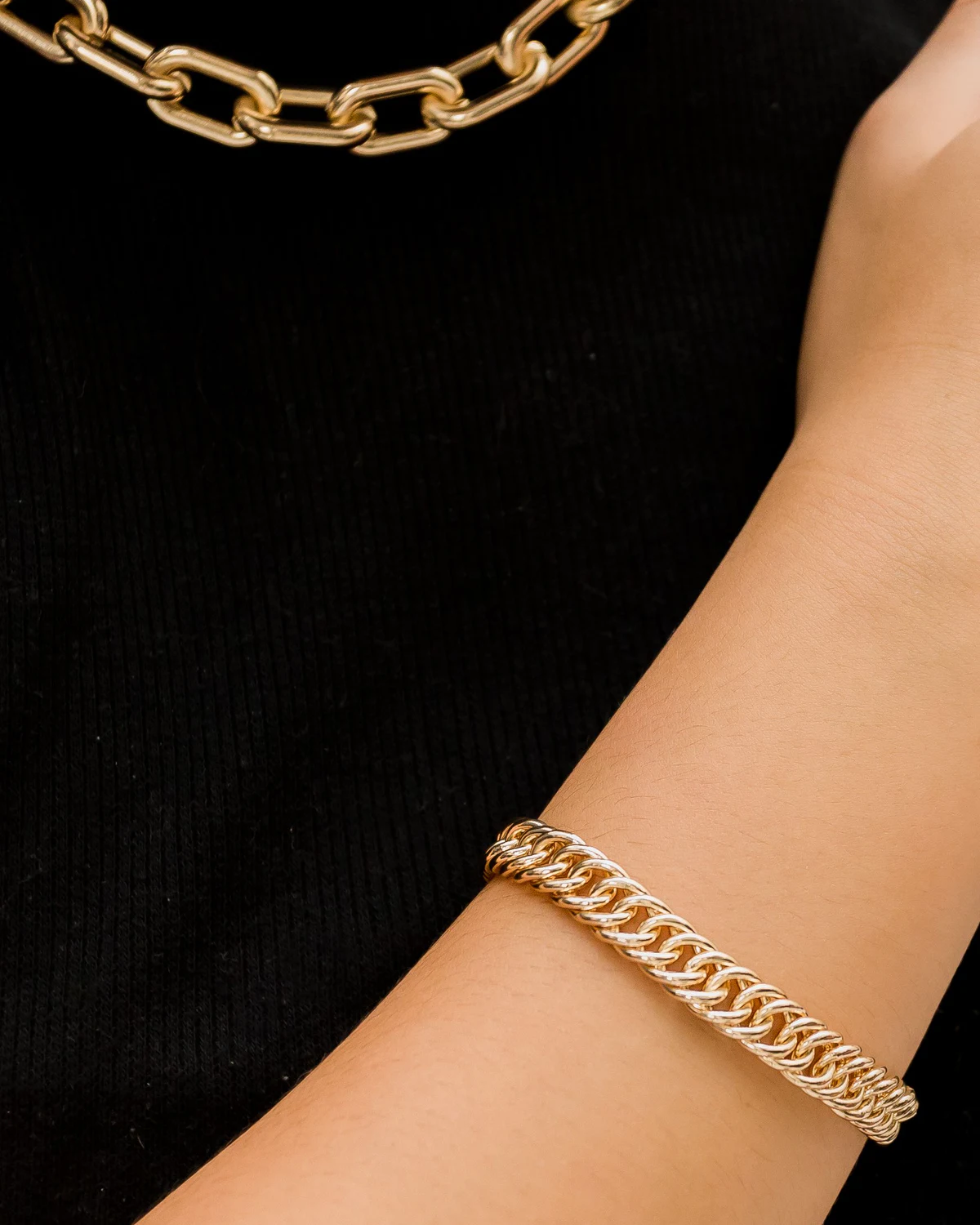
Iran has strong foundations for this shift: an 18k tradition, deep bench skill, a broad production network and customers who still see gold as both adornment and asset. The weakness is the gap between design, software, production engineering, branding and retail. Pieces are often made with an old high-weight logic, or simplified so aggressively that the making charge no longer feels visible or defensible.
A better path is contemporary Iranian design, controlled weight, repairable construction, transparent invoicing and clear buy-back. In that model, lighter weight does not reduce the industry’s role; it increases the share of knowledge, design and skill in the final value. As metal gets more expensive, the winners will be businesses that can prove why their product is more than spot price multiplied by grams.
The future belongs to jewellers who can create more trust and use with less metal.
Frequently asked questions
Does lightweight gold have a lower karat?
Not necessarily. Karat measures purity and weight measures mass. An 18k piece can be lightweight; its construction should be disclosed separately.
Is hollow gold poor quality?
Not inherently. Quality depends on geometry, wall thickness, alloy, joints, clasps and durability testing. Hollow construction should be disclosed and suited to the intended use.
Why can lightweight jewellery carry a high making charge?
Professional weight reduction can require more design, modelling, prototyping and precision production. The charge is defensible only when that value is real and transparent.
What matters most for everyday wear?
Clasp and joint strength, thickness at stress points, balance, repairability and the seller’s warranty matter more than apparent volume.
Is 14k the answer for Iran?
There is no universal answer. Karat acceptance depends on regulation, buying culture and resale. Innovation in transparent, well-engineered 18k design is currently the more credible path for Iran.
Global figures come directly from the World Gold Council’s Q2 2026 report. Iran figures are attributed guild estimates reported by ISNA. The Italy example is Reuters field reporting.
- World Gold Council — Gold Demand Trends Q2 2026: Jewellery
- Reuters — Record gold prices push Italian jewellers to make leaner designs
- ISNA — Iran gold-price increase and guild production estimate
- Pexels — Gold necklace workshop, moha sour
- Pexels — Jewellery design, Andrea Piacquadio
- Pexels — Jewellery on black, Laura Oliveira