
Defending craft should not begin by blaming the buyer. When people watch their purchasing power erode, choosing gold with the smallest apparent premium over raw metal is understandable. The individual decision can be rational while its market-wide result is damaging.
Why buyers move to melted and zero-charge gold
The short answer is inflation and distrust. Buyers want liquidity, a simple calculation and the smallest deduction on resale. Manufactured jewellery can look like a bundle of opaque making charges, margins, taxes and bid–ask differences. If the seller cannot show what real value the charge buys, “zero making charge” sounds smarter.
Melted gold is not inherently a bad asset and it is not the enemy of production; it is a production input. The problem begins when a large share of household demand moves from new products to raw material or repeated resale, closing the order channel that feeds workshops.
Melted gold
A production input whose assay, authenticity and dealing spread are decisive.
Standard bullion
A defined investment product with weight, fineness, hallmark and traceability.
Second-hand jewellery
Still a manufactured object, but its resale does not create a new workshop order.
New low-charge jewellery
A possible bridge between value preservation and production when pricing is transparent.
The mistake: treating every making charge as wasted money
For an investor, the part of a jewellery purchase not recovered at resale is a cost. For the economy, a genuine making charge pays for design, modelling, casting, setting, polishing, quality control, retail service and training. It does not disappear; it becomes wages, orders, knowledge and business turnover.
That does not make every charge defensible. An opaque or disproportionate premium without visible design, quality, service or a credible buy-back proposition pushes customers toward pure weight. A real making charge pays for work and craft; an unexplained charge becomes an advertisement for raw metal.
When gold is reduced to weight, the gold industry eventually loses its own weight.
What the data show: a global rotation with an Iranian expression
Iran lacks a regular public dataset that measures household transactions in melted, new and second-hand gold. Global data can establish direction, not quantify Iran. Iranian workshop figures therefore need to remain explicitly attributed guild estimates rather than presented as a census.
Year-on-year volume change in 2025
Percentage change versus 2024; rounded from World Gold Council demand tables
This chart provides global context; it does not establish the scale or cause of Iran's market shift. Source: World Gold Council
According to the World Gold Council’s full-year 2025 report, global investment demand rose about 84%, bar demand rose 24%, jewellery fabrication fell 19%, and jewellery consumption fell 18%. This does not prove a one-for-one transfer, but it shows investment gold outrunning manufactured gold as prices and uncertainty rose.
The affordability squeeze continued into 2026. In Q2, jewellery consumption by weight fell 17% year on year while dollar spending rose 14%. Dividing those two movements implies spending per tonne rose about 37.4%. That is a DIDAR calculation based on the WGC Q2 2026 table, not a directly quoted WGC metric.
In Iran, a guild official estimated in May 2026 that 60–70% of goldsmith workshops were in recession or idle. The same report said only five of roughly 40 making-related units in Babol were active. These are attributed industry claims, not a national statistical survey, but they are serious enough to demand better official data.

How the damage chain works
1. Fewer orders raise the cost of every piece
Workshops carry rent, tools, security, insurance, depreciation and skilled wages. When orders fall, fixed costs are spread over fewer pieces. The maker must raise charges, cut quality or close. Higher unit charges push more customers toward raw gold, producing a self-reinforcing cycle.
2. A lost job becomes a broken apprenticeship
Much goldsmithing knowledge is tacit: pressure, temperature, alloy behaviour, finishing sequence and defect correction are learned through repeated practice. A workshop without orders does not hire apprentices. When a master leaves, years of embedded knowledge leave too.
3. Design and technology are cut first
Under cash pressure, budgets for design, prototyping, software, precision equipment, research and brand building disappear early. Products become more generic and competition collapses toward price. An industry that cannot create value beyond grams is weak against brand-led global competitors.
4. Retail becomes a weighing desk
If the only buying question is “how many grams for the smallest premium?”, product guidance, service, durability and brand meaning lose relevance. Competition shifts to tiny spread differences, while trust and long-term customer relationships become more fragile.
5. Export value per gram declines
Raw gold carries mainly metal value. A strong piece can carry Iranian design, specialist making, brand, packaging and service. That added value supports better wages, reinvestment and international relevance. Moving only weight abandons the country’s human advantage in every gram.
Why the cost reaches beyond the trade
Jewellery production supports designers, modellers, casters, setters, polishers, photographers, packagers, retailers, trainers and equipment services. A fall in new orders reduces income and learning across this network and shrinks the taxable base of value-added activity.
Concentrating household savings in a non-yielding physical asset also has an opportunity cost. Gold can hedge and diversify, but it does not itself create recurring income or productivity. The metal in jewellery is equally inert; the difference is the transaction flow. A manufactured purchase directs part of the payment to labour, design and services, while melted gold concentrates almost all value in metal and trading spread.
Saying “melted gold is dead capital” without qualification would therefore be inaccurate. Investors can gain from price appreciation and liquidity. The defensible claim is narrower: when metal saving dominates productive investment, a smaller share of society’s money reaches new income, technology, products and jobs.
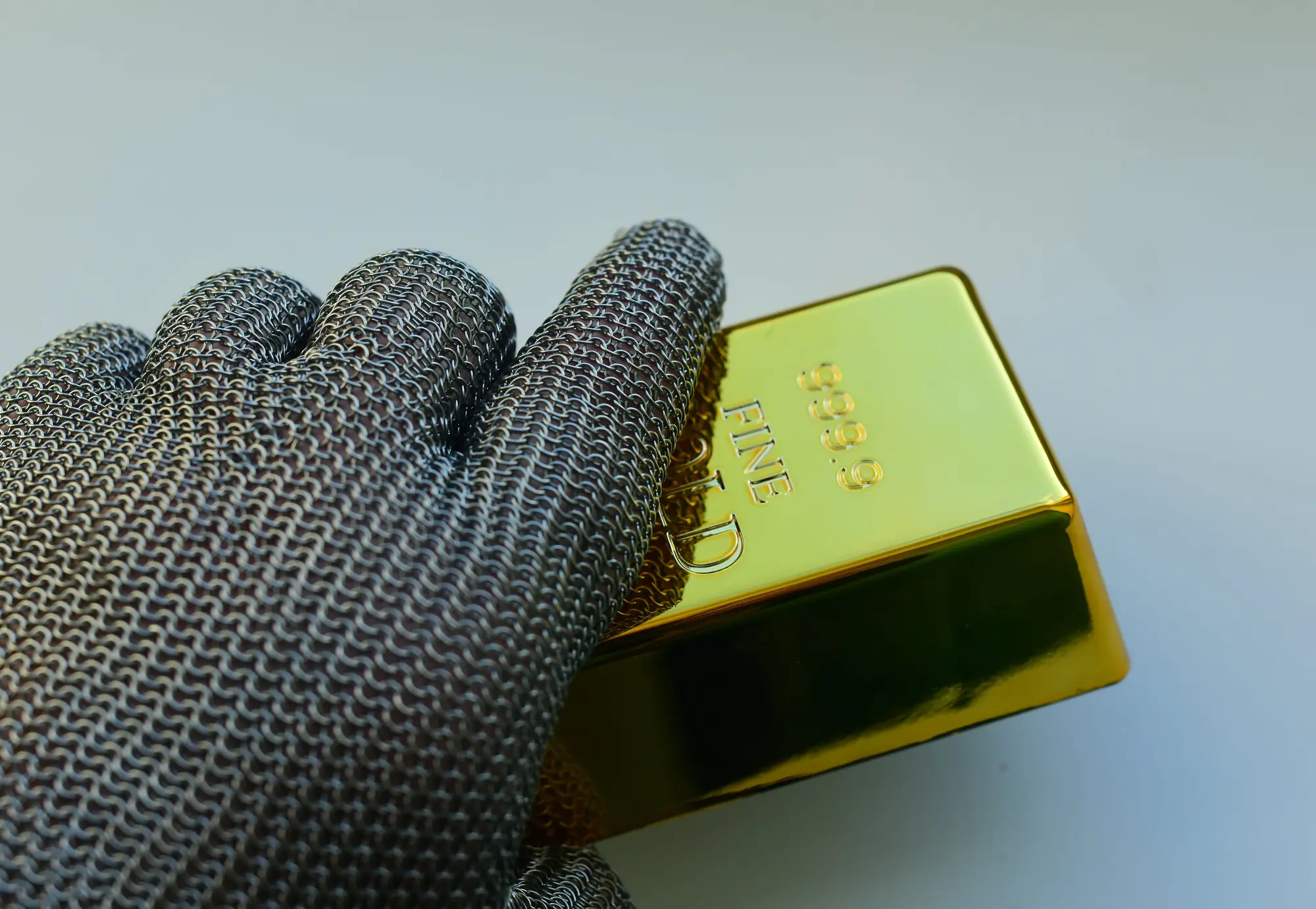
The risk that returns to the buyer
Melted gold is fundamentally an intermediate professional good. Workshops and wholesalers trade it for remelting, alloying and production. A retail buyer usually cannot independently verify assay quality, provenance or chain of custody and must rely on documentation and the seller. The hotter and less formal the market becomes, the larger this information gap can grow.
“Zero making charge” does not mean zero transaction cost. Platform fees, bid–ask spreads, delivery, repeat assay and deductions by a sceptical next buyer can all affect the realised exit price. A fair comparison uses actual entry and exit prices, settlement time, counterparty risk and physical-delivery terms—not the headline promise alone.
Fractional online products add a custody question: does the user own specifically allocated metal or merely have a claim on the platform? Where is it held, how is it audited, what does delivery cost, and what happens if many users request delivery together? These questions do not make a platform bad; clear answers are what make it credible.
Finally, gold cannot meet every financial need. It has no recurring cash flow and returns depend on price movement. A household that converts all liquidity into gold may have to sell at a poor moment to meet essential expenses. Preserving value, generating income, maintaining liquidity and controlling risk are different jobs; no single asset does them all perfectly.
Two buyers acquire the same weight of gold with the same budget. One directs almost all payment to metal and dealing spread. The other buys a new piece, sending part of the payment to design, making, finishing, retail and service. The first choice may suit the individual’s short-term return goal; the second creates domestic income and production capability as well as a gold holding. That flow difference—not the intrinsic value of the metal—is the economic point.
The industry must own its share of the failure
A defence of production is credible only when the trade accepts responsibility. Opaque pricing, weak invoices, disproportionate charges in parts of the market, generic products, unclear buy-back rules and tired retail experiences have eroded trust. Consumers did not reject craft overnight; the market often taught them that everything except weight counts for nothing at resale.
If a retailer celebrates design at purchase but sees only the scale at buy-back, the underlying message is obvious. Demand for making will not return through moral pressure. Value has to be visible in the product, contract, service and secondary-market proposition.
A way out: expand good choices instead of restricting buyers
Bans, shame and fear will not work. As long as inflation and uncertainty persist, investment-gold demand will remain. The sustainable response separates the need to preserve value from the market for manufactured objects, giving each clear standards and risk language.
Standard investment products
Small bullion products with fineness, serial numbers, tamper-evident packaging, traceability and transparent buy-back can meet investment demand without normalising anonymous raw material.
Fully separated invoices
Metal value, making charge, margin, tax and buy-back terms should be visible and comparable. Transparency is the strongest defence of a genuine making charge.
Lightweight, design-led gold
Design for real household budgets: lower weight, stronger form, durability, modularity and a charge whose value can be seen and felt.
Buy-back, exchange and upgrade
Repair, authenticity certificates, trade-in programmes and credible secondary markets can carry part of design value beyond the first transaction.
Regular public data
Guilds and regulators should publish production, workshop employment, transaction mix and assay complaints. Without data, the industry manages by story and fear.
Invest in masters and apprentices
Dual training, sample orders, insurance and apprenticeship support must connect learning to real demand rather than certificates alone.
Four short answers
Is buying melted gold inherently bad?
No. It is a production input and can preserve value. The issues are consumer assay risk and market-wide dominance over new production.
Is a making charge wasted money?
It may not be fully recovered on resale, but economically it pays for labour, design and service. It is defensible only when transparent and proportionate.
Does second-hand gold hurt production too?
Reuse extends product life and can be rational, but it does not create a new workshop order. Dominance of the secondary market reduces income for new making.
Should retail melted-gold sales be banned?
No. A durable answer is hallmarking, traceability, standard investment products, transparent invoices and better affordable jewellery.
Conclusion: this is not people versus the trade
Households need security and workshops need orders. Setting them against each other solves nothing. The industry must prove that making charges name real value; regulators must make investment gold safe and legible; and policymakers must recognise that workshops preserve skill, value added, export capacity and productive circulation.
Melted gold should be able to return to a workshop and take shape again. When it stops in vaults and repeated intermediary trades, the metal retains value while the human capability around it slowly loses value. The future will not be built by fighting gold, but by restoring meaning, trust and value to making.
Global calculations use World Gold Council full-year 2025 and Q2 2026 tables. Iran figures are presented only as attributed guild testimony because no national public transaction dataset was available. This article is not investment advice.